
Practice for Psychotherapy* in Düsseldorf
For your path to greater clarity, strength, and joy in life.
5.0 stars based on 40 Google reviews
*licensed under the German Heilpraktikergesetz
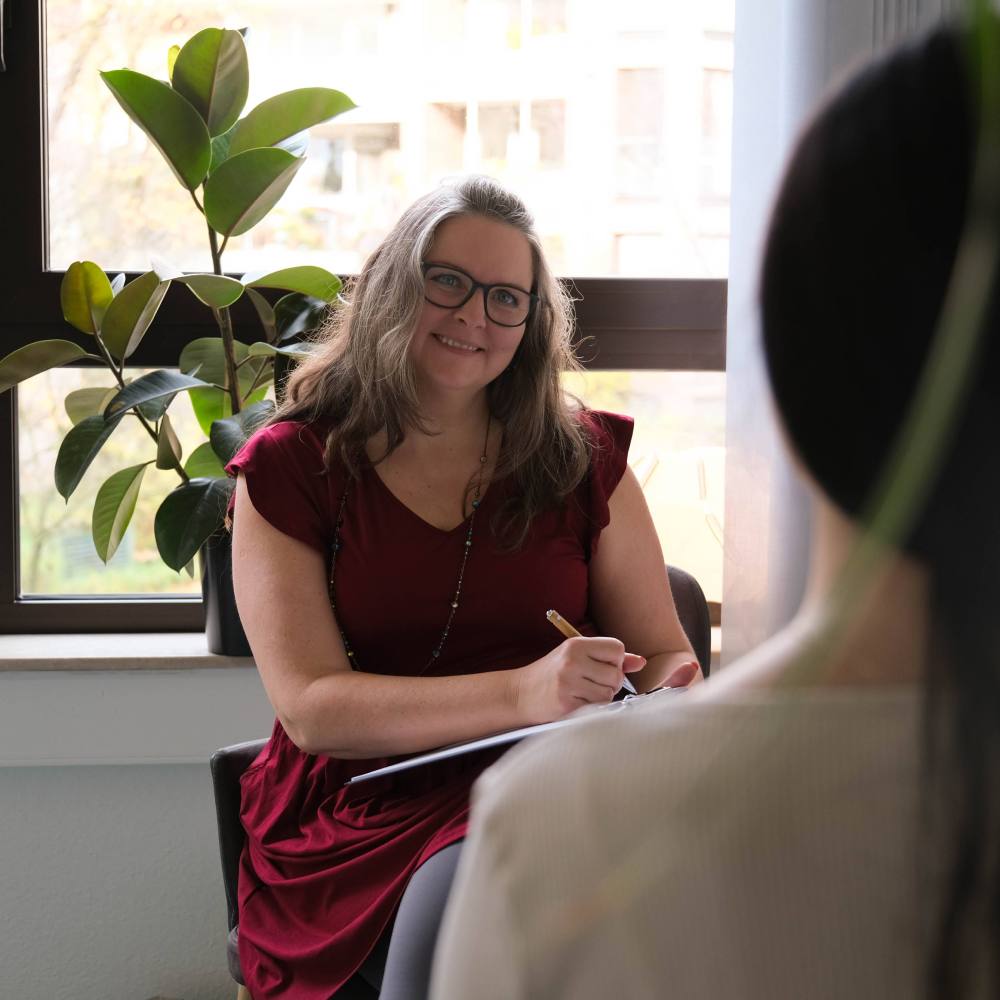
*licensed under the German Heilpraktikergesetz
Experienced experts featured in media and press
We do not judge and develop individual solutions
Free slots available, with short-notice evening appointments

Highlights of the Psychotherapy* Practice in Düsseldorf*

Welcome to our Psychotherapy* Practice in Düsseldorf
Our experienced team of practitioners has been supporting people seeking help for over 13 years with psychotherapy* in Polish, German, English, French, Russian, and Turkish. Thanks to our scientifically recognized methods and our experienced team, most clients require far fewer sessions than they might expect (statistically only 3–5 sessions).
In our practice, you are in good hands with all your concerns, attitudes, decisions, thoughts, and feelings. Regardless of your worldview—whether religious (e.g., Christian or Muslim), spiritual, or non-religious—we approach your personal beliefs with respect and openness. You may have already thought things through extensively without finding a solution to your problem. We support you in developing tailored and practical solutions. Positive change may occur faster than you expect.
We do not judge. You are invited to be honest with yourself and with us—this is often the key to achieving rapid improvement in your situation.
How we can support you in our psychotherapy* practice

Psychotherapy*
Psychotherapy (HPG) is aimed at individuals with mental health conditions or disorders.

Couples Therapy
We are relationship coaches. Create change, growth, and solutions in your relationship.
Coaching
Coaching can also be applied to all areas of life, including personal, professional, and family life.
- Psychosomatic disorders
- Anxiety disorders
- Depression
- Crisis / life crisis
- Workplace issues
- Single therapy / relationship status counseling
- Somatoform disorders
- Self-doubt
- Supervision
- Climate anxiety
- War-related anxiety
- Premarital counseling
- Marriage counseling
- Relationship problems
- Anxiety, phobias & obsessive-compulsive disorders
- Burnout
- Panic disorder
- Derealization / depersonalization
Which methods are used in our Psychotherapy Practice?*
Many people wonder whether a psychologist, therapist, or coach can actually help. An expert in their field can do more than you might think – using proven, evidence-based methods and empathy, we identify hidden patterns and help make individually tailored solutions visible for you.
Below, we have listed some methods that have proven effective in practice. We use these approaches to help achieve noticeable improvements in your situation, often in the short term.
“Half an hour of meditation is absolutely necessary, except when you are very busy. Then you need an hour.”
François de Sales
Stress – the most common cause of illness
In our society—especially in today’s fast-paced world—many people suffer from stress. This stress can come from external sources, such as time pressure, or from within, for example the inner drive to constantly achieve or gain approval.
Often, people become so caught up in the “hamster wheel” of life that they lose the ability to pause. Sometimes thoughts and activities feel unstoppable. I would like to encourage you to begin a journey back to your inner source of calm. This is also the source of health and well-being. I am happy to support you in this process.
Physical and psychological illnesses and disorders are often the logical consequence of chronic stress.
Relaxation methods help restore balance
Relaxation techniques are used to address both symptoms and underlying causes. They can serve as a preventive measure to avoid overload, but also as support when illness has already developed and balance has been lost. In this sense, relaxation methods should be seen as a complementary approach that can support healing. They never replace medical consultation.
Support from health insurance providers
Since health is also important to health insurance providers, they often encourage participation in relaxation courses. In many cases, course fees are subsidized or even fully covered. Please check with your insurance provider or contact me directly for more information.
“Everything becomes a little different once it is spoken out loud.”
Hermann Hesse
You are at the center of our sessions
Therapy and coaching are a space of freedom for you. Here you are invited to speak, reflect, and experience your emotions—such as fear, joy, anger, sorrow, or shame—and express them openly.
We do not judge you, your behavior, or the thoughts you share with us. Nor will we pressure you to change. We are here for you, providing a protected space in which you can show yourself as you are. We also commit to being honest with you.
In such a space, change and personal development can take place.
This experience of being able to express everything gives you the opportunity to regain balance, recognize solutions, and implement change.
Through mindful body awareness, breathing techniques, or targeted movement, inner blockages can be released, stress reduced, and new resources activated. Often, even a small change in posture or a conscious movement can create a new sense of stability, confidence, or lightness.
Instead of only talking about challenges, body-oriented coaching also involves sensing, trying, and experiencing. This creates a holistic development process in which not only thinking, but also body awareness and personal presence can change sustainably.
“Before the answer, it is never clear what the meaning of the question is.”
Steve de Shazer
Solution-focused brief therapy does not concentrate on problems, but on solutions. Instead of spending long periods analyzing causes, the focus is on existing strengths, resources, and concrete next steps.
The approach assumes that every person already carries solutions within them—they simply need to be made visible. Through targeted questions such as “What has worked in the past?” or “What would your life look like if the problem were solved?”, a new focus emerges: away from deficits and toward possibilities.
Since small changes often have a big impact, solution-focused brief therapy emphasizes practical and realistic goals. Even a few sessions can help gain new perspectives and become more capable of action—with the trust that solutions are often closer than they first appear.
Neuro – We perceive our environment through our senses: we see, hear, feel, smell, and taste. The information we take in is stored in the brain—neurally.
Linguistic – Refers to what happens in our minds when we communicate through language, both in our internal dialogue and in communication with others.
Programming – Refers to the storage of our patterns—recurring ways of thinking, feeling, and behaving.
NLP – What is it?
NLP is a collective term. Its founders studied various therapeutic approaches and adopted the most effective techniques into NLP. They also analyzed highly successful individuals and identified what made their thinking and behavior different.
From this, they developed techniques that can be applied in sessions today.
Would you like to approach your challenges as creatively as Walt Disney, or as brilliantly and limitlessly as Einstein? We can show you how.
NLP is based on scientific research, including findings from neuroscience. It uses insights from science (e.g., what happens in the brain when we think or feel certain things) and integrates them into NLP applications, so-called “formats” (e.g., no longer having positive associations with the smell of cigarettes, but a neutral feeling or even aversion).
NLP in therapy and coaching
If you would like to first get to know NLP techniques without addressing deeper life issues, we recommend starting by strengthening your resources or expanding your abilities in the first session.
After experiencing the positive intensity and lasting effect of these methods, you can decide whether you would also like to work on more personal or challenging topics using this approach.
“As soon as one element of a system changes, all elements of that system inevitably change.”
This is a recognized method in psychotherapeutic practice (under the Heilpraktikergesetz). It does not focus only on the individual (the client), but also on the system they are part of, such as family, friends, or work environment.
Since we are embedded in multiple systems at the same time, our freedom of choice is often more limited than it may initially appear. Only by considering systemic dynamics can lasting change be achieved and maintained.
Hypnosystemic coaching combines elements of hypnotherapy (“hypno”) and systemic counseling (“systemic”) to support clients in achieving their goals.
Hypno (inner focus): This involves directing attention to unconscious and involuntary processes and inner resources (without necessarily using classical hypnosis). The goal is to value these inner parts and use them for finding solutions by activating hidden competencies.
Systemic (context focus): This considers the client and their concerns within the context of relevant systems (e.g., family, work, organization). Behavioral patterns are understood as part of these interactions.
The aim is to facilitate change in thinking, feeling, and behavior by bringing conscious goals into cooperation with unconscious processes, developing solutions that fit the client’s overall life situation. The client is seen as the expert of their own solutions.
Get to know us

Karolina Goralski
Certified Social Pedagogue (Dipl. Soz. Päd.), Licensed Healing Practitioner for Psychotherapy


Phillip Czarnecki
Certified Psychologist, Licensed Healing Practitioner for Psychotherapy & Coach

Aleksandra Golsheyder
Psychological Counselor & Prospective Practitioner for Psychotherapy






What is the process of psychotherapy*?
Initial consultation
The free initial consultation is conducted by phone with our practice coordinator. The aim is to get to know your current situation and concerns. Together, we determine which of our therapists is the best fit for you and schedule your first session.
Regular session
In 90-minute individual sessions, we discuss your topics and work together on solutions. Scientifically based methods are tailored to your individual needs, and you receive practical tools to help you apply what you have learned in your everyday life.
Reflection & outlook
As therapy progresses, new perspectives and insights are integrated, which usually leads to longer intervals between sessions. We regularly review your progress together and take satisfaction in your achievements.
The psychotherapy* practice provides space for your concerns
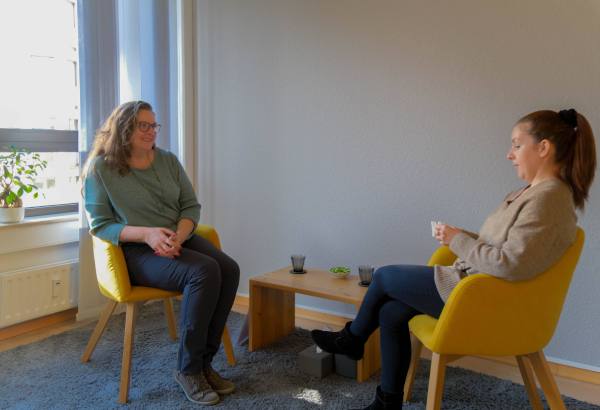
In our practice, you will find bright, welcoming rooms where you can immediately feel at ease. The calm atmosphere invites you to focus on yourself and your concerns and to take new steps at your own pace.
We offer appointments without waiting times, so you can usually begin your psychotherapy* within a week. Our goal is to provide you with support that strengthens you—in a space that conveys safety, calm, and clarity.






How much does psychotherapy* cost at our practice in Düsseldorf?
Thanks to our effective methods and many years of experience, many clients require significantly fewer sessions than initially expected—often just 3–5 appointments are enough to achieve noticeable progress. Of course, we cannot make any promise of a cure.
Our services are offered exclusively on a self-pay basis, as statutory health insurance does not cover the costs. This allows you to benefit from short waiting times and a free choice of methods, without being bound by rigid regulations.
For comparison: For insurance-funded therapy, the waiting time is currently usually 8–12 months, and the approved treatment methods are significantly limited. In addition, any use of therapy through statutory health insurance is recorded in your medical file, which may later have disadvantages, for example when applying for insurance or civil service employment.
| Offer | Duration | Cost incl. VAT |
| Introductory Session (optional & non-binding) |
from 30 min | from €60 |
| Individual Therapy / Coaching | 90 min | from €150 |
| Couples Therapy | 120 min | from €280 |
| Workshops & Group Therapy (see current offers) |
from €70 | |

Request your appointment now
We are here for you – in German, English, French, and Polish. You can reach us by phone, by email, or conveniently via our contact form.
Become part of our satisfied clients
I am very satisfied and would definitely recommend the practice. The atmosphere is very familiar, so you immediately feel at ease. Individual needs are addressed, and I do not feel like “just a number.”
GF on Google.de
Mr. Zumbach is a very competent and friendly coach. I always felt well supported and was able to speak openly and freely with Mr. Zumbach about my problems. Within two sessions, Mr. Zumbach provided me with lasting help. Thank you for the new perspective on things!
Sara on Google.de
We can only highly recommend Phillip. He was able to help us in a very short time in a truly wonderful way. His manner is very calming and likeable. We thank you from the bottom of our hearts, M and S.
Mike Hoho on Google.de
I can warmly recommend Ms. Sarah Schwinning. She is not only incredibly attentive, patient, and empathetic, but she also radiates a calmness and competence that makes it easy to open up. Together, we were able to find many new solutions. Thank you very much!
Johanna on Google.de
I can only recommend the practice. I can wholeheartedly recommend Odile. She showed me the way and helped me develop in a positive direction. I only had five sessions and was able to get back on the right path afterward.
Marianne Brezovecki on Google.de
I can highly recommend Ms. Hartmannshenn as a coach. Her clear and client-centered approach opened up a new perspective on my questions. In just a few meetings, we were able to work together in a deep and solution-oriented way, which was of great benefit to me.
Johanna Fröhlich on Google.de
Frequently asked questions about psychotherapy*
Most couples see improvements within three to five sessions, though the number varies depending on the complexity of the issues.
No. While counseling can help in times of crisis, it is also beneficial for couples who want to improve their communication, strengthen their bond, or prepare for future challenges.
No. A professional marriage counselor remains neutral, providing guidance to help both partners express their feelings and work towards mutual understanding.
Yes. Many therapists in Düsseldorf offer counseling services in English, making it accessible to international couples and expats.
It is common for one partner to be more reluctant. An initial consultation can help ease concerns and clarify the benefits of therapy.
The first step is to contact our practice in Düsseldorf and schedule an initial consultation. During this session, the therapist will assess your situation and discuss the best approach for your needs.
A non-medical practitioner for psychotherapy supports people experiencing emotional distress, mental health conditions, and crisis situations. They assess the situation, develop an individual treatment plan together with the client, and work with various psychotherapeutic methods. The goal is to alleviate symptoms, understand underlying causes, and develop new ways of finding solutions.
It is suitable for anyone who wants to cope with psychological stress or mental health conditions—without the long process of obtaining approval from health insurance providers.
Typical reasons for psychotherapy with a non-medical practitioner include:
- anxiety, panic, depressed mood, exhaustion, or burnout
- sleep disorders, inner restlessness, excessive rumination, or suicidal thoughts
- emotional crises and acute stressful situations
- recurring conflicts in relationships, family, or work
- interpersonal problems or family-related issues
- processing traumatic or painful experiences
- gaining a better understanding of oneself and changing personal patterns
- desire for personal development
- the feeling: “Things cannot go on like this”
- when fast and flexible appointments are important
Even more severe issues can be treated. In more complex cases, close cooperation with medical doctors or clinics takes place.
Psychologists have completed a degree in psychology but are not allowed to provide psychotherapy without additional training.
Licensed psychological psychotherapists have completed state-recognized psychotherapy training after their studies. If they have statutory health insurance approval, treatment costs can be covered by public health insurance. However, insurance providers restrict the range of therapeutic methods, and therapy is always recorded in the patient’s medical file.
Non-medical practitioners for psychotherapy hold a state license to practice psychotherapy, work privately, offer short waiting times, and a wide range of methods. Treatment can be provided without being recorded in insurance medical records.
In short:
Psychological psychotherapists usually work within the statutory health insurance system.
Non-medical practitioners for psychotherapy work on a self-pay basis, with greater flexibility, no insurance record, and short waiting times.
Yes. Non-medical practitioners for psychotherapy hold a state license to practice medicine. Many also have additional training or further education in scientifically recognized methods.
How to recognize professionalism:
Transparent information, many years of experience, very good reviews, an individualized approach, and a safe, trustworthy manner.
No. You can contact us directly—no doctor’s visit, referral, or health insurance approval is required.
Yes. Non-medical practitioners for psychotherapy are also permitted to treat severe mental health conditions and suicidal crises. In more complex cases, as in psychological psychotherapy, they work closely with psychiatrists or neurologists.
Statutory health insurance companies generally do not cover the costs of psychotherapy with a non-medical practitioner. However, private health insurance or supplementary insurance often reimburses them, depending on the specific policy.
But there is also an advantage to self-payment:
No entries are made in your health insurance medical record—this can be important, for example, when applying for or changing insurance policies (such as disability, health, or life insurance) or in relation to civil service employment.
Yes. Everything you share is subject to confidentiality. Your data and the content of sessions remain confidential and are not passed on to health insurance companies, employers, or other parties. Information is only shared if you explicitly request it (e.g., if your general practitioner or partner is to be informed about something).
It depends on the specific insurance plan. Many private health insurance policies or supplementary insurance plans cover (part of) the costs.
Important:
- Self-payment = not recorded in your medical insurance file, which means no disadvantages for future applications for insurance (e.g., disability insurance, life insurance, etc.)
- Submitting claims to insurance = recorded in your medical file, which may lead to higher premiums or rejection of insurance applications
Therapy depends on trust. If you notice that you cannot open up or that the collaboration does not feel right, address it openly. A good therapist will respect this—and you are always free to change therapists.